
- Roofing Guidance
- Industries We Serve
Roofing for the Contractors and Suppliers Around Hill AFB
Weber and Davis counties carry one of the densest concentrations of aerospace and defense supplier buildings in the Mountain West, stacked around Hill Air Force Base and stretching from Roy through Clearfield and up into Layton. We roof the machine shops, precision-parts plants, and logistics buildings that support that base and its prime contractors - not the base itself. We don't hold clearances, we don't claim on-base access, and any contractor who tells you otherwise on a bid is telling you what you want to hear.
What a Location Near the Fence Line Actually Changes
A roof over a defense supplier building isn't a different roof system than one over a regular warehouse. What changes is the schedule and the paperwork around it. Getting a crew onto a supplier site near Falcon Hill or the Business Depot Ogden campus usually means a visitor request submitted days ahead, ID verification for every worker on the truck, and a facility security officer who has final say over when equipment can stage in the parking lot.
We plan around that instead of fighting it. That means submitting worker lists early, keeping crew rosters stable so we're not re-submitting new names mid-project, and building slack into the schedule for the days security review runs long. None of that requires us to have access to anything classified - it just requires respecting that the building's tenant does, and that their process governs our timeline.
Falcon Hill and the Supplier Buildings Off Base
Falcon Hill Aerospace Park sits right against Hill's west boundary, and the low-slope roofs over its tenant buildings cover precision manufacturing floors, avionics shops, and logistics staging for parts headed onto base. Those roofs take the same Wasatch Front weather as everything else in the valley - canyon-wind gusts funneling down off the bench, lake-effect snow loading flat roof decks through the winter - but the equipment underneath is often more sensitive to a slow leak than a typical warehouse floor.
A pinhole over a CNC machine or a calibration lab does real damage fast, and it does it on a schedule the tenant can't just absorb. That's why dry-in speed matters more here than on a standard retail reroof. We size crews and materials for same-day water-tight closure on tear-offs over these buildings rather than leaving a deck open overnight under mechanically fastened felt and hoping the forecast holds.
The Promontory and Brigham City Supply Chain
Northrop Grumman's solid rocket motor complex out at Promontory, northwest of Brigham City, pulls a long tail of smaller supplier and logistics buildings into the corridor along US-89 and I-15 - machine shops, composite fabricators, and freight consolidators that never touch the test site itself but still run under some version of restricted-access rules. Those buildings tend to be older metal-building stock with through-fastened panel roofs or aging single-ply that was never upgraded when the tenant's security posture tightened.
We see a lot of these roofs where the building's access control has outpaced its roof maintenance. Nobody wants to schedule a full reroof crew through a badge process, so leak repairs get deferred and the roof degrades quietly. A recover system over sound metal panels, or a coating over aging single-ply, often solves the practical problem without forcing a full tear-off through months of access coordination.
Where Other Bids Leave Out the Real Cost of Access
We've reviewed enough competing quotes on these buildings to know where they fall apart. A contractor prices a standard 4-day tear-off, then discovers the site needs three separate escort windows and background checks that take a week to clear, and the "unforeseen delay" change order lands on the owner's desk. The bid looked competitive because it never priced the actual site.
- No line item for badge/visitor-request lead time built into the schedule, so the first week becomes dead time billed as standby
- Crew roster assumed fixed, with no plan for what happens when one worker fails a background check and needs a same-week replacement
- No allowance for split shifts around a tenant's test or production windows, which is common on machine-shop and lab buildings
- Staging and dumpster placement assumed to be anywhere on site, when security often restricts laydown to one approved zone
- No mention of who documents the completed work for the tenant's own facility records, which some of these operators require independent of our invoice
None of that requires special clearance to plan for. It requires having actually roofed these buildings before and knowing what the access process costs in real days, not what a generic commercial bid template assumes.
Systems That Fit Manufacturing and Logistics Buildings in This Corridor
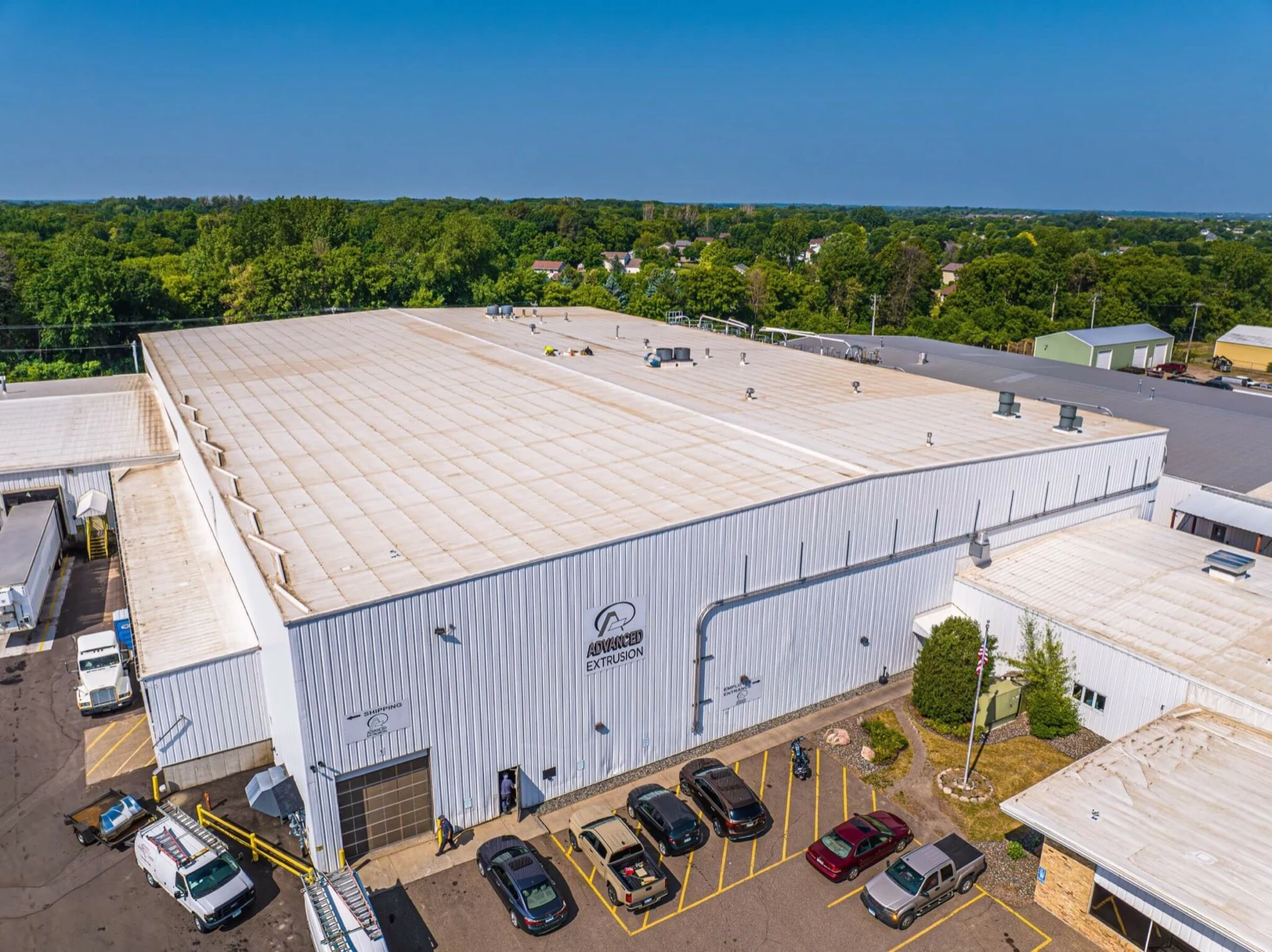
Most of what we install in this cluster is TPO single-ply over metal deck for larger manufacturing bays, and mechanically fastened or fully adhered systems depending on how much rooftop equipment the tenant has bolted down for HVAC and process exhaust. Older metal-panel buildings often make more sense as a recover over the existing panel than a tear-off, especially when a full tear-off would require re-clearing site access for a longer project window than a recover crew needs.
Where the building has years of life left in the deck but the surface is failing, a silicone coating buys real service life without a tear-off at all, which matters when scheduling access is the hardest part of the job. We spec each of these based on deck condition and the tenant's tolerance for site disruption, not a default answer.
Questions We Get From Facility Managers in This Corridor
Do you have clearance to work on Hill AFB itself?
No. We work on privately owned and leased supplier and contractor buildings around the base, including Falcon Hill and the surrounding industrial parks. We don't claim base access, and any roofer who tells you they can get a crew through the gate without going through the base's own contracting and security channels isn't being straight with you.
How far ahead do we need to submit worker information for site access?
It varies by tenant, but we plan for the review to take longer than a typical commercial job's mobilization window and build that into the proposed schedule rather than promising a start date we can't hit.
Can you work around production hours instead of shutting a line down?
Yes, on most buildings. We've run split shifts and weekend-only mobilizations on manufacturing roofs where a full shutdown wasn't an option, especially over machine shops and calibration spaces where downtime is expensive.
What happens if a crew member doesn't clear a background check?
We keep a bench of qualified crew beyond the initial roster specifically so a failed or delayed clearance doesn't stall the whole project. That's a staffing decision we make up front, not a problem we solve after the schedule slips.
Do you provide documentation the tenant can keep for its own facility records?
Yes. We provide inspection photos, material data, and warranty paperwork the tenant can file independently, which some defense-adjacent operators require for their own compliance records separate from our standard closeout package.
Questions About Aerospace & Defense Facility Roofing in Ogden, UT
Ready to Review the Roof?
Industries We Serve
Roofing for aerospace and defense suppliers near Hill AFB in Ogden and Layton: security-aware scheduling, fast dry-in, and no invented base-access claims.
Plan the Next Step