
- Roofing Guidance
- Service Areas
Commercial Roofers in Brigham City
Commercial roofers serving Brigham City should document leak sources, wet insulation, drainage, edge details, penetrations, and repair history before recommending a scope. Brigham City runs two very different commercial roof markets under one Box Elder County seat: heavy manufacturing plants tied to the aerospace and automotive-safety supply chain, and a compact downtown of county government buildings, retail, and professional offices along Main Street. A quote written for one doesn't transfer to the other, and we scope them as separate problems from the start.
The Manufacturing Plants Run a Different Roof Economy
Brigham City is home to a major automotive-safety component manufacturer and sits along a corridor tied into solid rocket motor and aerospace manufacturing history that runs back decades in this part of Box Elder County. Plant roofs at this scale carry heavy rooftop mechanical loads, process exhaust systems, and in some cases roof-mounted equipment tied directly to manufacturing operations that can't tolerate downtime. A leak over a production line is a different priority than a leak over a break room, and we scope plant work with that distinction built in from the first site visit.
These buildings also tend to be large single-roof structures with few interior fire walls breaking up the field membrane, which means a roof section failure can affect a much bigger area of production floor than a comparable failure would on a smaller commercial building. We size drain and scupper capacity to the full roof area and check for ponding patterns across the entire field rather than limiting the inspection to the section where a leak was reported.
Production Schedules Don't Bend for Roofing
Manufacturing plants running multiple shifts don't have a slow season for roof work built into their calendar. We sequence tear-off and close-in around production schedules the plant provides, not around what's convenient for the crew, and we plan noise-sensitive work for whatever windows the plant identifies as lower-impact. A bid that doesn't ask about shift schedule before proposing a timeline is guessing at a constraint that matters more here than almost anywhere else in this market.
Downtown Main Street Is a Smaller-Scale, Slower-Moving Market
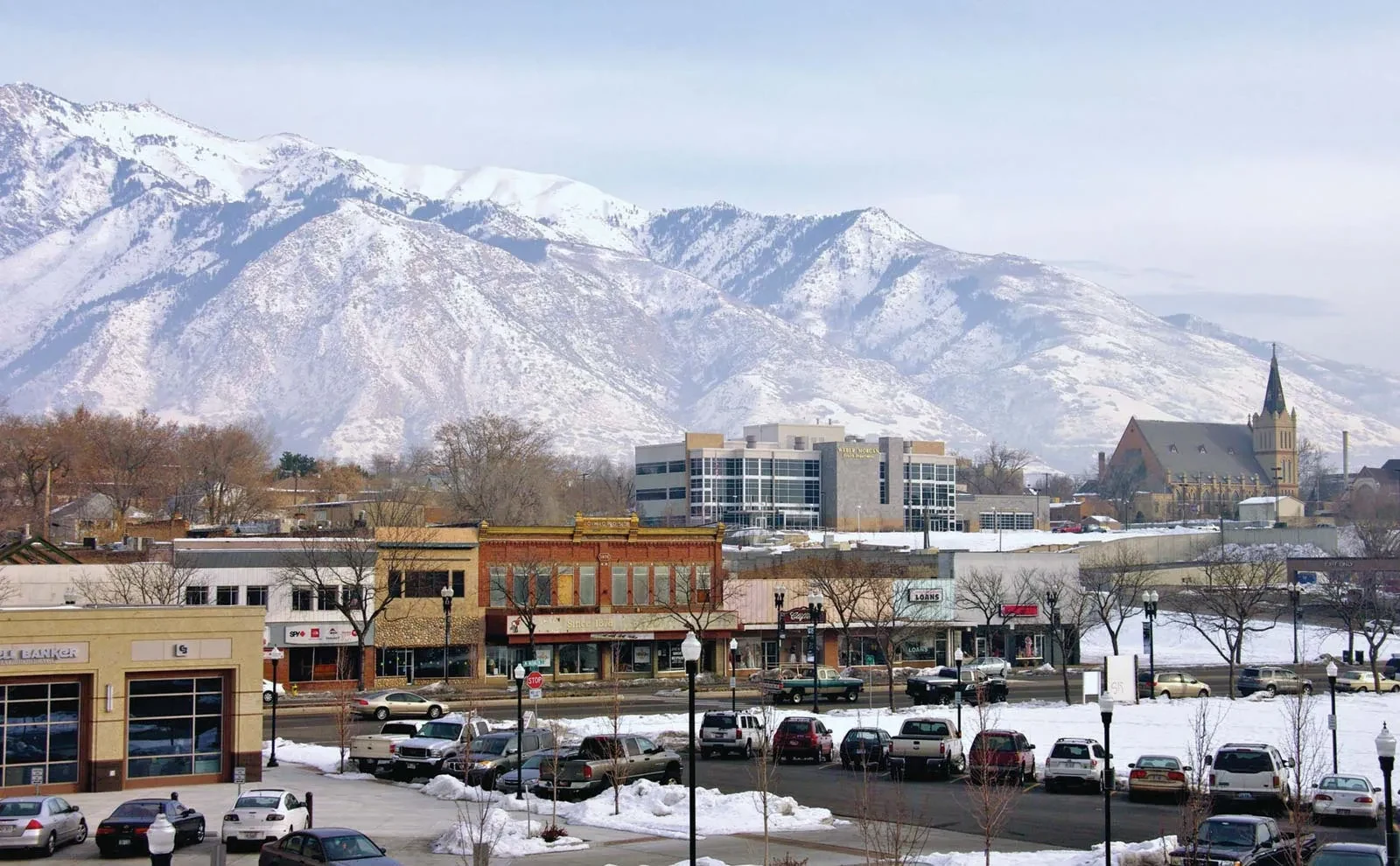
Away from the plants, Brigham City's downtown carries county government buildings, retail storefronts, and professional offices in a mix of older brick construction with flat roof additions and newer standalone commercial buildings. These roofs are smaller and lower-risk than the plant roofs, but government buildings often carry procurement requirements, bid documentation standards, and approval timelines that move slower than a private commercial job. We build that lead time into the schedule rather than treating a county building like a private storefront that can start next week.
What Changes the Bid Between the Two Markets
- Production-line proximity and shift schedule coordination for plant roof work
- Roof-mounted process equipment loads and clearance requirements at manufacturing sites
- Government procurement and documentation requirements for county-owned downtown buildings
- Ponding and drain capacity checked across large unbroken plant roof fields
- Historic brick building considerations for older downtown Main Street structures
- Noise and vibration-sensitive work windows identified by the tenant, not assumed by the crew
Older Downtown Buildings Hide Structural Surprises
Some of the flat-roofed additions behind Main Street's older brick storefronts were built at different times with different structural assumptions than the original building, and roof loading that's fine on one section can be marginal on an addition tacked on decades later. We check structural documentation or get an engineer's opinion before proposing equipment additions or heavier roofing systems on these older combined structures, rather than assuming uniform capacity across a building that clearly wasn't built all at once.
Why Plant Bids and Downtown Bids Shouldn't Be Compared
An owner comparing a per-square-foot number from a downtown storefront quote to a plant roof quote is comparing two different jobs. The plant roof carries production-schedule coordination, heavier equipment loads, and larger unbroken roof fields that change the drainage math. The downtown roof carries procurement timelines and older structural conditions. Neither number tells you anything about the other building.
Brigham City also sits at the north end of the Wasatch Front weather pattern, closer to the Bear River corridor than the buildings further south in the Ogden and Layton markets, and that brings its own seasonal swings. Winter accumulation and freeze-thaw cycling still drive our drain sizing and flashing details here, but we also see more agricultural and open-field wind exposure on the edges of town where plant sites sit closer to undeveloped land than a downtown building surrounded by other structures. Fastening patterns and edge detail get checked against that specific exposure, not a single citywide default.
Questions Brigham City Owners Ask
Can roof work happen without interrupting plant production?
In most cases, yes, when the schedule is set around the plant's shift pattern and any noise-sensitive processes are identified ahead of time. We coordinate directly with plant operations before finalizing a timeline.
Do county buildings require a different bid process?
Government-owned buildings often carry procurement and documentation requirements that add lead time compared to a private commercial job. We factor that into the schedule from the start rather than treating it as a private-sector timeline.
Why does a plant roof need a different drainage plan than a smaller building?
Large, unbroken roof fields common on manufacturing buildings can develop ponding patterns across a wider area than a smaller building with more roof breaks. We check the full field rather than limiting the review to the reported leak location.
Are the older downtown buildings structurally different from newer construction?
Some flat-roofed additions behind Main Street's brick storefronts were built at different times with different structural assumptions. We verify capacity before proposing heavier systems or new rooftop equipment on these buildings.
How do you handle roof-mounted process exhaust at a manufacturing site?
We size flashing and clearance to the specific equipment and confirm any fire-separation requirements tied to what the exhaust is venting, rather than using a standard curb detail meant for HVAC only.
Questions About Commercial Roofing Contractors Brigham City, UT
Ready to Review the Roof?
Service Areas
Commercial roofing contractors serving Brigham City, UT with commercial roof repair, replacement, coatings, maintenance programs, inspections, and documented roof reports.
Plan the Next Step