
- Roofing Guidance
- Commercial Project Types
Distribution Center Roofs Inside the 1,100-Acre Business Depot
Business Depot Ogden runs over a thousand acres of distribution and manufacturing space, and new logistics buildings keep filling in the gaps out toward West Haven and Farr West along I-15. These roofs are newer on average than a lot of what we see elsewhere in the county, but new does not mean simple, especially once dock high doors, conveyor penetrations, and solar-ready structural upgrades enter the picture.
Dock-Side Details That Get Overlooked
The edge of a distribution roof above the dock apron takes more abuse than almost any other part of the building. Truck traffic vibration, dock leveler mechanisms bolted through the slab below, and canopy tie-ins at the roofline all put stress on details that were often value-engineered down during original construction. We spend extra time at the dock-side parapet and canopy flashing on every distribution center inspection because that is where we find the first signs of trouble.
Roof access for dock-area repairs also has to work around an active truck court. We plan lift placement and material staging with a site's shipping schedule instead of assuming the yard is ours for the day.
New-Construction Roofs Still Need a Real Scope
A lot of distribution buildings out here are under fifteen years old, which leads some owners to assume the roof is fine and defer real inspection. Membrane warranties do not cover installation defects that show up later, and TPO seams from a fast-track new build sometimes get less quality control than an experienced crew would want. We inspect newer distribution roofs the same way we inspect a 30-year-old warehouse: seam probe, flashing check, drain confirmation.
What Gets Left Off a Fast-Track Distribution Bid
Distribution developers move fast, and the roofing bids that win those jobs sometimes win by cutting corners a facilities team only discovers years later.
- Reduced fastener density at the perimeter zone, which is where wind uplift risk is highest
- Minimal walkway pad protection near rooftop mechanical units serviced regularly
- Undersized overflow drainage sized to code minimum instead of the roof's actual runoff
- Skipped manufacturer inspection at close-out, leaving warranty documentation incomplete
- No as-built roof plan handed over to the facilities team after substantial completion
When we take over maintenance or repair on a newer distribution building, the first thing we do is fill in whatever documentation gap the original installer left behind.
Snow and Wind Loading on Big Open Roofs
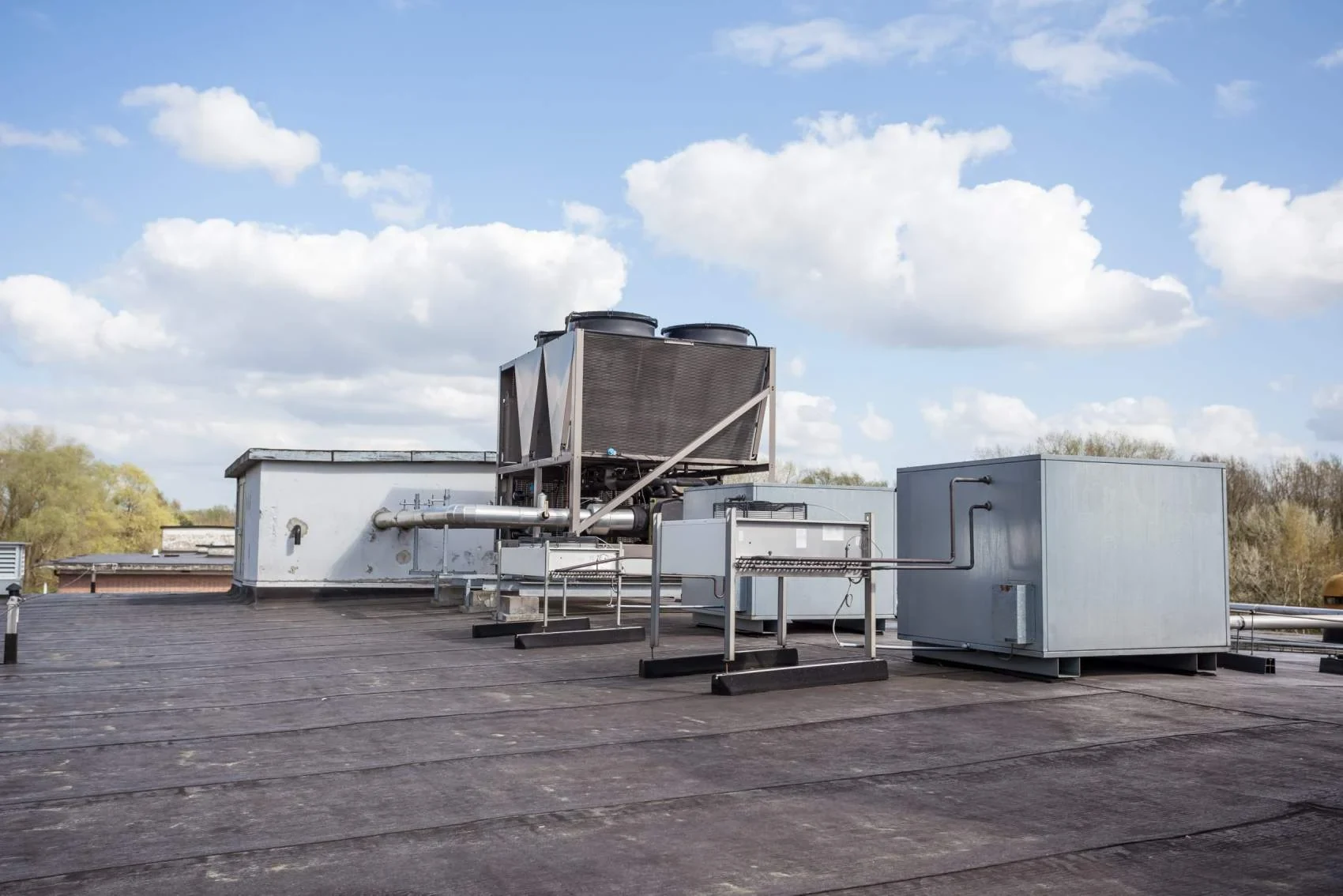
These buildings have enormous unbroken roof planes, which means wind gets a long, uninterrupted run before it hits a parapet or rooftop unit. Combined with heavy winter snow accumulation off the lake, that geometry puts real stress on perimeter fastening and rooftop equipment curbs. We check equipment curb attachment and screen wall bracing as part of every distribution center scope, not as an afterthought.
Roof-mounted solar arrays are also becoming more common on newer distribution buildings in this corridor as operators look to offset energy costs. Solar mounts add another category of penetration and a structural load the original roof design may or may not have accounted for, and we coordinate closely with the solar installer on flashing and attachment details rather than treating that scope as someone else's problem once panels are on the roof.
Coordinating Around a Live Operation
Distribution centers rarely close, even for a day. We schedule tear-off in sections, keep active dry-in over any exposed area at the end of every shift, and communicate directly with the facility's operations manager rather than routing everything through a general contractor who is not on site. That direct line matters when a forecast changes mid-project and a section needs to get closed in ahead of schedule.
Sprinkler and fire suppression tie-ins at the roof deck also need careful sequencing on an active distribution building, since these facilities often carry high-piled storage classifications that come with specific fire code requirements. We coordinate with the facility's fire protection contractor whenever roof work intersects with suppression system penetrations so nothing gets left in a non-compliant state overnight.
Building Age and What It Tells Us Before We Even Get on the Roof
A distribution building's age tells us roughly what era of construction practice built it, and that shapes what we look for first. Buildings from the earlier wave of Business Depot Ogden development often have narrower rooftop unit curbs and different fastening patterns than the newest construction out toward West Haven, and knowing that history before the inspection saves time once we are actually up there.
Distribution Roofing Questions We Get
Does a newer distribution roof still need regular inspection?
Yes. Installation quality and workmanship issues on newer roofs often do not surface for several years, and manufacturer warranties rarely cover those defects once discovered late.
Can roof work happen without stopping dock operations?
In most cases yes. We plan staging and lift access around active shipping schedules and communicate directly with the operations team.
What roof areas fail first on a distribution building?
Dock-side parapets, canopy tie-ins, and rooftop equipment curbs typically show wear before the open field of membrane does.
Do you review manufacturer warranty documentation on newer roofs?
We can review what was provided at close-out and identify any gaps in inspection records or as-built documentation.
How do you handle a distribution roof during an active weather event?
We prioritize securing open work areas, checking drains, and confirming perimeter and equipment attachment before and after wind or snow events.
Questions About Distribution Center Roofing in Ogden, UT
Ready to Review the Roof?
Commercial Project Types
Distribution center roof scopes for Business Depot Ogden and growing West Haven and Farr West logistics buildings, written around dock and drainage realities.
Plan the Next Step