- Roofing Guidance
- Commercial Project Types
Apartment Roofs in the Fastest-Growing Corners of the County
Syracuse, Clinton, and West Point have added apartment and townhome stock at a pace that outruns a lot of the roofing crews trying to keep up with it, and a lot of that new multifamily construction shares low-slope roof sections over breezeways, clubhouses, and garage buildings that get less attention than the pitched roofs over the units themselves.
Low-Slope Sections Hiding Inside a Pitched Roofline
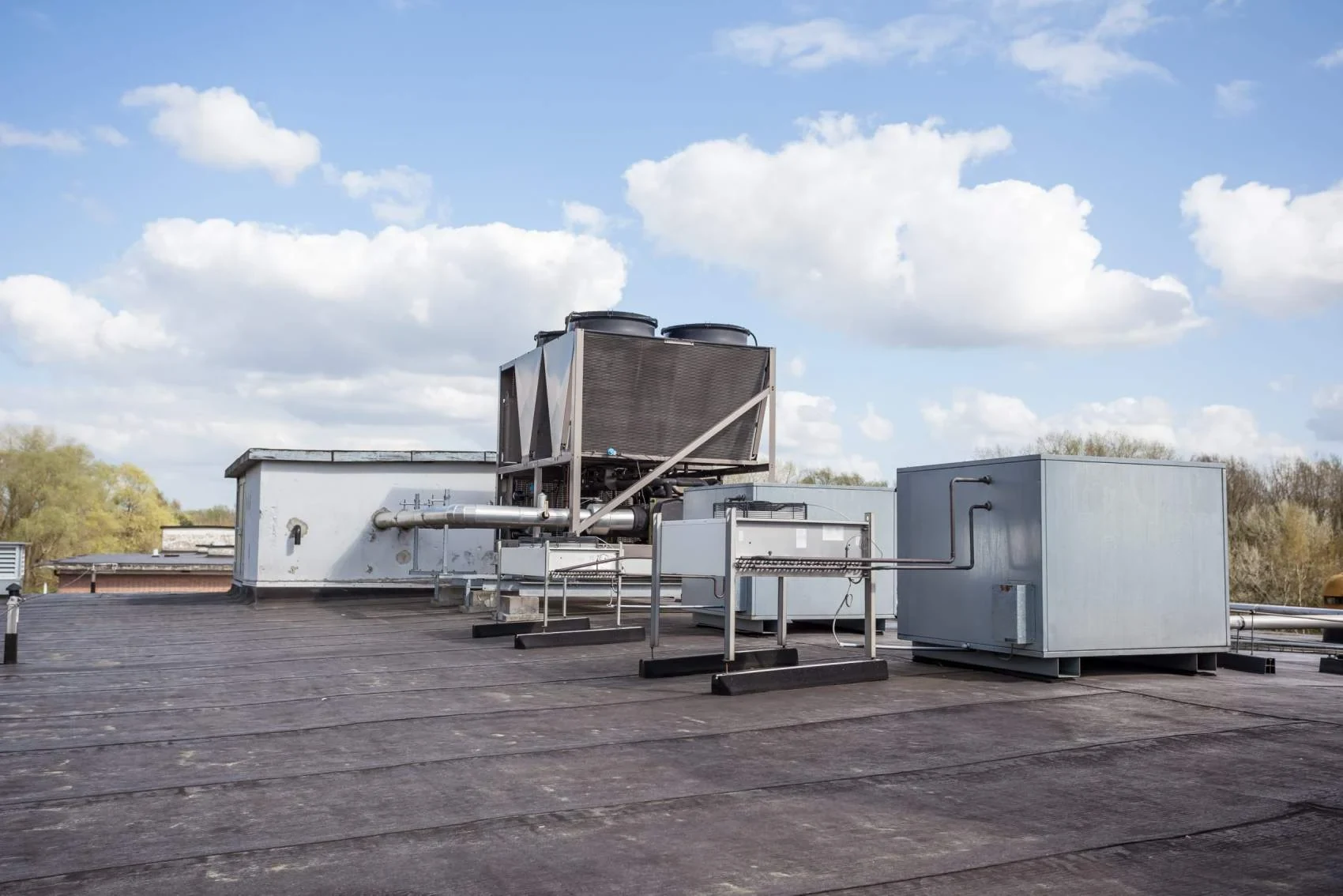
Most multifamily buildings out here read as pitched-roof structures from the street, but tucked behind that shingled roofline are frequently flat or low-slope sections over breezeways, mechanical rooms, and connector corridors between buildings. Those sections use entirely different roofing systems than the visible shingle field, and they get inspected far less often because nobody can see them from the parking lot.
We check those hidden low-slope areas as a standard part of any multifamily inspection, since they are disproportionately where leaks originate on buildings that otherwise look roof-healthy from ground level.
Occupied Units Change How Every Repair Gets Planned
A leak over an occupied unit is not an abstract maintenance item, it is a resident's ceiling, belongings, and sometimes a habitability issue property management has to respond to on a deadline. We prioritize active leak calls at occupied buildings and coordinate directly with property managers on resident notice, since Utah's landlord-tenant rules give residents specific expectations around habitability and repair timelines that a property manager has to meet.
What Gets Missed on a Fast Multifamily Bid
Property management companies overseeing several communities sometimes bundle roof bids across properties to save time, and that bundling can flatten real differences between buildings.
- Hidden low-slope sections over breezeways and mechanical rooms left out of a shingle-focused bid entirely
- Resident notice and access coordination costs, assumed to be the property manager's problem alone
- Gutter and downspout condition on buildings where ice damming has already caused past interior damage
- Attic ventilation issues contributing to ice dam formation, treated as a separate problem from the roof itself
- Clubhouse and amenity building roofs quoted separately even though they share the same maintenance budget
We inspect and price the whole property as one system, because a resident does not care whether the leak is over their unit or the leasing office when the ceiling stain shows up either way.
Ice Damming on Steeper Roof Sections
Heavy lake-effect snow followed by a sunny freeze-thaw day creates classic ice dam conditions on the pitched sections of these newer apartment buildings, especially where attic insulation and ventilation were not detailed generously during fast-track construction. We look at ventilation and insulation, beyond shingle condition alone, when diagnosing repeat winter leaks near eaves.
Gutters on these buildings often ice over completely during a hard freeze, backing meltwater up under shingles at the eave line even when the shingles themselves are in decent condition. We check gutter heat cable presence and condition as part of any winter-related leak investigation, since a missing or failed heat cable is a cheap fix compared to the interior damage a repeat ice dam can cause.
Scheduling Work Around Residents, Not Around Us
Multifamily work means coordinating around parking, resident vehicles, playgrounds, and pool areas that cannot simply be closed off without notice. We provide property managers with a written schedule they can post for residents ahead of time, and we keep material staging away from unit entries and common walkways whenever the site layout allows it.
Noise ordinances and quiet hours also factor into scheduling in residential settings in a way they rarely do on a commercial site. We plan tear-off and other loud work within whatever local noise restrictions apply to a given community and communicate start times clearly so residents are not caught off guard by early morning roof work overhead.
Building Age Across a Growing County
The apartment stock across Syracuse, Clinton, and West Point spans everything from buildings barely five years old to older complexes built before the current wave of growth. We evaluate each property on its own roof age and system rather than assuming newer automatically means lower risk, since fast construction timelines during a growth boom do not always mean careful roof detailing. A property manager who owns both an older and a newer building in the same submarket often finds the newer one needs attention first once we get up there. That is not a knock on any particular builder, it is just what happens when a market grows this fast and crews are stretched thin across every job site in the county.
Multifamily Roofing Questions We Get
Do you inspect the flat sections hidden behind a pitched roofline?
Yes, and we treat those low-slope sections as a standard part of any multifamily inspection since they are a common source of undetected leaks.
How fast do you respond to a leak over an occupied unit?
We prioritize active leak calls at occupied buildings and coordinate with property management on resident communication and repair timing.
What causes repeat winter leaks near apartment eaves?
Ice damming from attic ventilation and insulation gaps is the most common cause, and we evaluate both the roof and the attic when this comes up repeatedly.
Can you provide a schedule property managers can share with residents?
Yes. We provide written scheduling documentation ahead of any disruptive work so property managers can notify residents in advance.
Do you price clubhouse and amenity buildings separately from the residential roofs?
We can, but we recommend evaluating the whole property together since maintenance budgets and access logistics usually overlap across all the buildings on a site.
Questions About Multifamily Apartment Roofing in Ogden, UT
Ready to Review the Roof?
Commercial Project Types
Apartment and multifamily roof repair and replacement across growing Weber and Davis County communities like Syracuse, Clinton, and West Point.
Plan the Next Step