
- Roofing Guidance
- Roof Systems
SBS Modified Bitumen: Redundancy Over a Single Membrane
A lot of the older commercial buildings around Ogden were originally roofed with built-up roofing, and when those roofs finally give out, SBS modified bitumen is often the most direct upgrade rather than a jump to single-ply. It's a multi-ply system by nature, and that redundancy is worth understanding before a bidder talks an owner into a single-layer product because it's faster to install.
What SBS Modified Bitumen Actually Is
SBS stands for styrene-butadiene-styrene, a rubber polymer blended into asphalt to give the sheet flexibility that straight asphalt roofing never had. It's manufactured as rolled sheets, usually installed in a base ply and a cap ply, sometimes more layers depending on the assembly, with each seam overlapped and sealed to the one below it. That layered structure is the core difference from single-ply membranes like TPO or EPDM, which rely on one sheet and its seams to keep water out.
On a roof where the deck has some irregularity, or where the owner wants a second line of defense if one seam eventually fails, that redundancy is a real advantage. Water that gets past the cap sheet still has to get past the base ply seams, which typically run in a different pattern, before it reaches the deck.
Application Methods and What They Mean for the Job
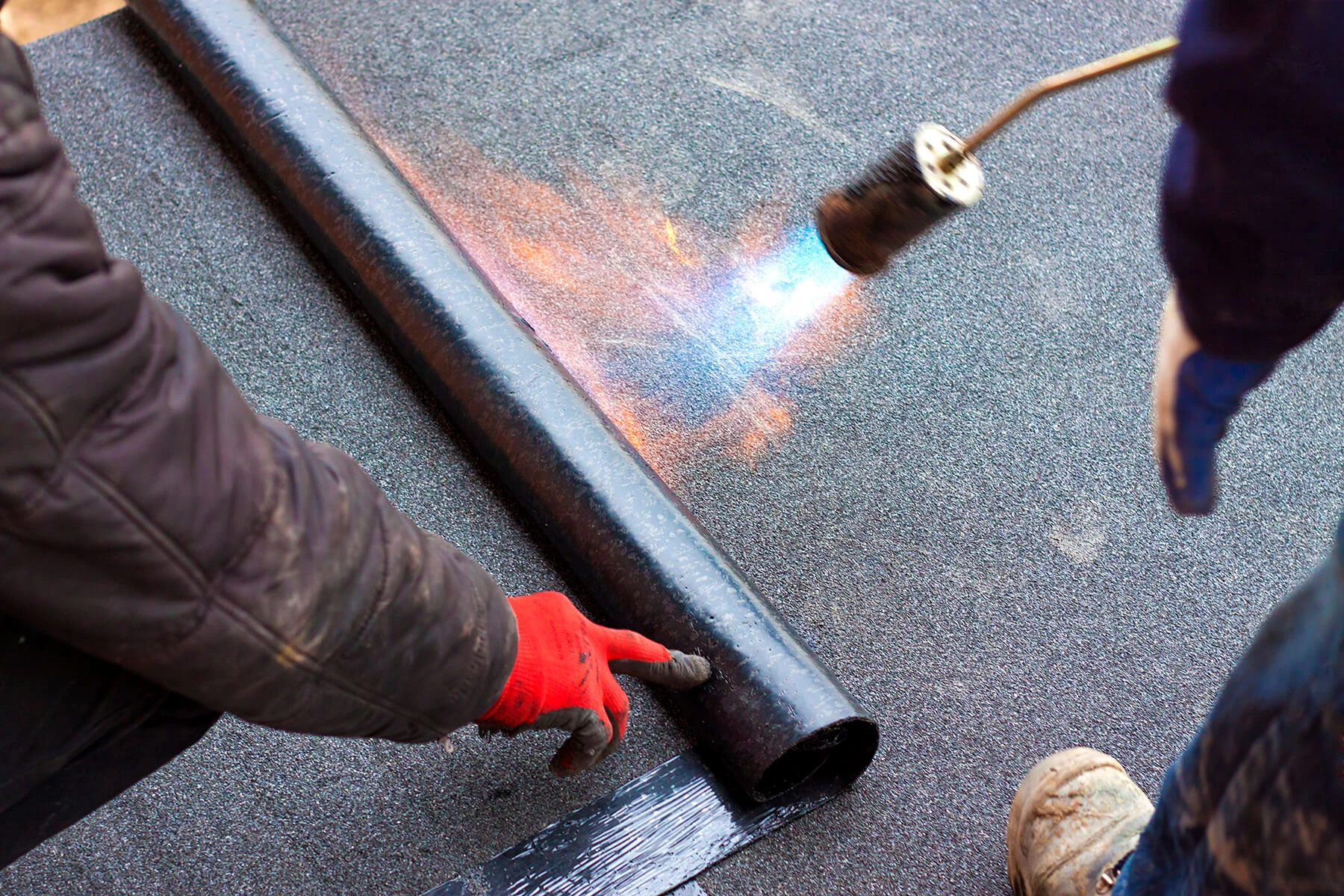
SBS modified bitumen goes down three main ways: torch-applied, where the underside of the sheet is heated with an open flame to melt the asphalt and bond it to the substrate; cold-applied, using an adhesive instead of heat; and self-adhered, where the sheet has a factory-applied adhesive backing activated by pressure. Each has tradeoffs. Torch-applied gives a strong, proven bond but carries fire risk during installation, especially on a re-cover job over combustible insulation or near existing rooftop equipment. Cold-applied and self-adhered methods avoid the open flame but depend more heavily on surface prep and ambient temperature at the time of installation.
A bidder should tell you which method they're proposing and why, rather than just default to torch-down because it's what the crew is fastest at. On buildings with sensitive rooftop equipment or in situations where a fire watch adds real cost and scheduling complexity, cold-applied or self-adhered can be the better call even if the material cost runs slightly higher.
Granulated Cap Sheets and Snow Shedding
Cap sheets commonly come with a granulated surface, similar in concept to a fine gravel embedded in the top layer, which protects the asphalt underneath from UV degradation. That granulated surface also affects how snow behaves on the roof. It has more surface friction than a smooth single-ply membrane, which means snow doesn't slide as freely toward drains and low points, but it also insulates the membrane slightly from direct sun exposure, moderating the melt-refreeze cycling that causes ice buildup at drains.
On a low-slope roof carrying real winter accumulation, that's generally a wash compared to smooth single-ply - neither behavior is inherently better, but it changes what to watch for. Drains need to stay clear of granule buildup over time, since loose granules can wash toward and clog drain strainers during heavy melt events.
Re-Covering Older Industrial Decks
Buildings from the postwar industrial era around the west side and Clearfield's older sections were often built with steel decks and built-up roofing systems designed for a different set of code requirements than current construction. When those roofs reach end of life, SBS modified bitumen is frequently the more compatible re-cover option because its installation methods and structural demands on the deck are closer to what the original built-up system required, compared to a mechanically fastened single-ply system that may need a different fastener pull-out capacity than an older deck can reliably provide.
We pull core samples on any re-cover candidate this old, checking deck condition, existing insulation R-value, and how many prior roof layers are already stacked up before recommending SBS over a single-ply alternative.
- Application method: torch-applied, cold-applied, or self-adhered, matched to the building's fire and access constraints
- Ply count: base sheet plus cap sheet, or additional plies for extra redundancy
- Cap sheet type: granulated, smooth, or coated, and how it affects UV protection and snow behavior
- Deck condition and fastener pull-out capacity, verified with a core sample on older buildings
- Drain and scupper condition, checked for granule buildup risk after installation
- Fire watch requirements and cost if torch-applied method is used
Cost Against Single-Ply Alternatives
SBS modified bitumen labor tends to run higher than single-ply installation because of the multiple plies and, for torch-applied systems, the slower pace of open-flame work compared to hot-air welding. Material costs are usually competitive with mid-range single-ply options. The total project cost comparison depends heavily on deck condition and how much remediation an older deck needs regardless of which membrane goes on top of it, so we run that comparison building by building rather than quoting a rule of thumb.
Questions on SBS Modified Bitumen
Is modified bitumen outdated compared to TPO or PVC?
It's a different category of system, not an outdated one. The multi-ply redundancy and compatibility with older decks make it a sound choice on the right building, even though single-ply has become the more common default for new construction.
Is torch-down roofing dangerous for occupied buildings?
It carries real fire risk during installation that needs to be managed with a fire watch and proper precautions, particularly near combustible insulation, but it's a well-established method when handled correctly. Cold-applied or self-adhered alternatives avoid the open flame entirely if that's a priority.
How many plies does a typical commercial SBS system have?
Most commercial applications use a base ply and a cap ply, though some specifications call for an additional interply for extra redundancy on buildings where that extra protection is worth the added labor cost.
Does modified bitumen handle Ogden's snow load well?
Yes, it's a proven system under sustained snow load, and its granulated cap sheet moderates melt-refreeze cycling differently than a smooth single-ply membrane, without a clear performance disadvantage either way.
Can modified bitumen be installed over an existing built-up roof?
Often, if the existing roof is dry and structurally sound, though it still requires a core sample and inspection to confirm the deck and insulation underneath can support another layer rather than needing full tear-off.
Questions About SBS Modified Bitumen Roofing in Ogden, UT
Ready to Review the Roof?
Roof Systems
SBS modified bitumen re-roofing for older Ogden industrial buildings: torch-down vs cold-applied methods, ply counts, and snow-shedding cap sheet options.
Plan the Next Step