
- Roofing Guidance
- Roof Systems
Spray Foam Roofing: Solves Ponding, Demands Discipline
Spray polyurethane foam is the only roof system that can actually fix a dead-flat deck's drainage instead of just working around it. It's also the roof system with the widest gap between a good installation and a bad one, because so much of its performance depends on application skill that can't be verified by looking at the finished surface the way you can inspect a welded seam.
Why Foam Fixes What Other Systems Can't
SPF is sprayed as a liquid that expands and cures into a rigid closed-cell foam, applied in a series of passes that build up thickness. Unlike a membrane that gets installed flat over whatever slope the deck already has, foam can be built up thicker in low spots and thinner elsewhere, creating slope to drain on a roof that was built dead flat decades ago, before current drainage standards existed.
A lot of the older industrial buildings around Clearfield and the west side have exactly that problem - a deck with zero built-in slope, drains that were adequate by an older standard, and decades of ponding water that's slowly degraded whatever roofing sat on top of it. Foam is often the most direct way to fix the actual drainage problem rather than re-roofing over it and watching the same ponding pattern reappear.
Foam Also Insulates While It Waterproofs
Closed-cell polyurethane foam has a high R-value per inch compared to most rigid board insulation, and because it's sprayed directly to the deck, it eliminates thermal bridging at fastener penetrations that a mechanically attached insulation board system can't avoid. On a building where insulation upgrade and waterproofing are both on the table, foam can accomplish both in one system rather than requiring a separate insulation layer under a membrane.
That combined function is part of why foam can be cost-competitive with a full tear-off and new membrane system, even though the material itself isn't cheap, because it can replace two line items - insulation and waterproofing - with one installed system.
Where Quality Control Actually Happens
Foam density and thickness are entirely dependent on spray technique, ambient temperature and humidity at the time of application, and equipment calibration. A crew spraying too fast, in the wrong weather window, or with poorly calibrated proportioning equipment can produce foam that looks fine on the surface but has inconsistent density or thickness underneath - exactly the kind of defect that doesn't show up until the roof is already failing.
We take core cuts at multiple points across a finished foam roof to verify actual thickness and density against spec, rather than just a visual walk-through. That's a step some competitors skip because it takes time and because a thin spot is much easier to hide under a coating than a thin spot in a membrane roof is to hide under a seam.
- Minimum foam thickness specified in inches, verified with core cuts after installation
- Foam density specified in pounds per cubic foot, matched to the manufacturer's protective coating requirements
- Application weather window: temperature, humidity, and dew point limits followed during spraying
- Protective topcoat type - silicone or acrylic - and its dry film thickness
- Slope-to-drain plan showing where foam thickness increases toward low spots
- Recoat interval and maintenance schedule to keep the protective topcoat intact
The Recoat Cycle Owners Get Surprised By
SPF foam itself isn't UV-stable and degrades quickly if left exposed, which is why every foam roof gets a protective topcoat - usually silicone or acrylic - applied over it. That topcoat isn't a one-time application. It needs periodic recoating on a maintenance cycle to stay intact, and a roof where the topcoat has worn thin exposes the foam underneath to UV and moisture damage that's expensive to repair once it starts.
A bid for foam roofing that doesn't include a documented recoat schedule and maintenance plan is setting an owner up for exactly that surprise a decade in, when the topcoat has thinned and nobody flagged it as something requiring attention on a schedule rather than as a set-it-and-forget-it system.
Impact Resistance and Hail Exposure
Foam's rigid cell structure handles foot traffic reasonably well when the topcoat has aggregate or a durable finish, but it's more vulnerable to impact damage from hail or dropped tools than a flexible membrane, since the cured foam can crack or crush under a sharp impact rather than flexing. Utah's Wasatch Front sees hail events, and any foam roof spec here should account for that risk with an appropriately durable topcoat and, in some cases, granule-embedded coating for extra impact resistance rather than a smooth coating alone.
We factor hail exposure into the topcoat recommendation on every foam job rather than defaulting to whatever coating is cheapest to spray.
Questions on Spray Foam Roofing
Is spray foam roofing durable enough for Ogden's climate?
Yes, with the right topcoat maintained on schedule. Foam handles temperature cycling and insulates well, but the topcoat needs periodic renewal to keep protecting the foam underneath from UV and hail exposure.
How is foam thickness verified after installation?
Core cuts taken at multiple points across the roof measure actual installed thickness and density, which is the only reliable way to confirm the spec was met since the finished surface alone won't show it.
Does foam roofing fix ponding water permanently?
It can eliminate ponding by building slope into the foam application itself, addressing the underlying drainage problem rather than just resisting standing water the way a coating does on a flat membrane.
How often does the foam topcoat need to be recoated?
It depends on the coating type and the roof's UV and weather exposure, but it should be inspected regularly and recoated on a defined schedule before the existing topcoat wears thin enough to expose the foam underneath.
Can foam be sprayed over an existing roof without tearing it off?
Often yes, if the existing roof surface is dry, sound, and free of loose gravel or debris that would prevent proper adhesion, which is one of foam's advantages on a re-cover project.
Questions About Spray Polyurethane Foam Roofing in Ogden, UT
Ready to Review the Roof?
Roof Systems
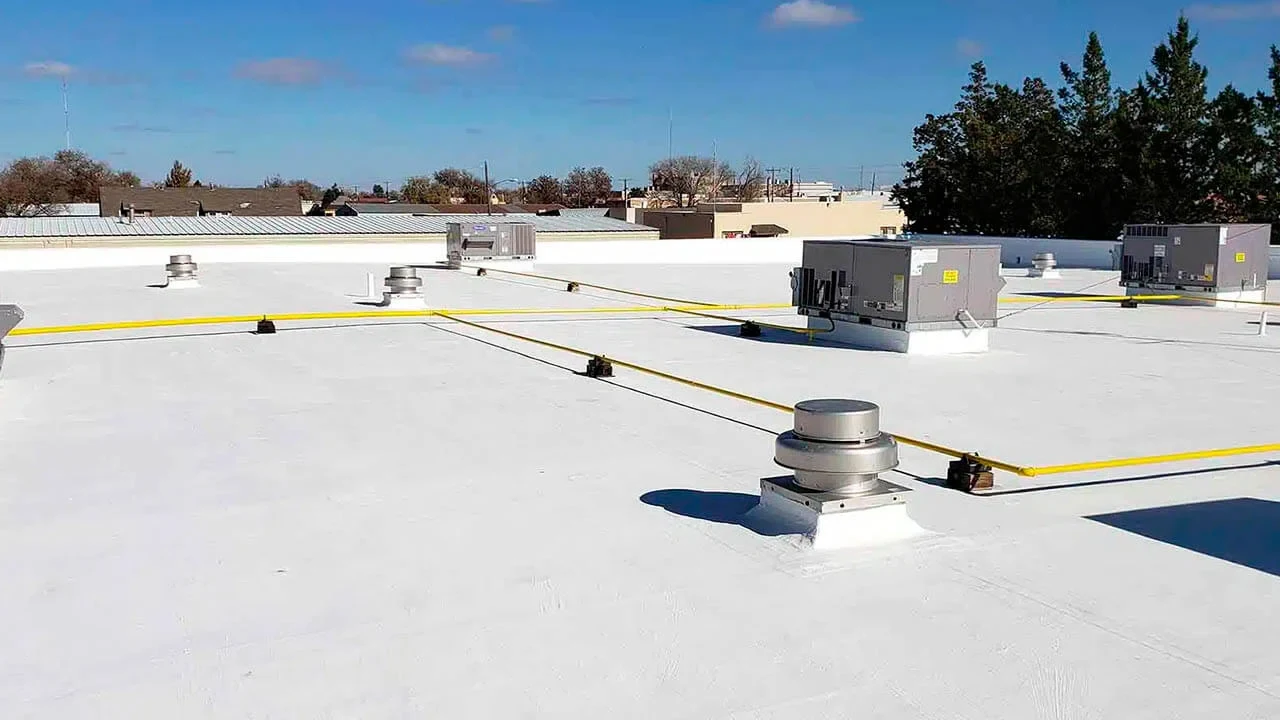
SPF roofing on older Ogden industrial buildings: sloped-to-drain foam over dead-flat decks, foam density and thickness quality control, and recoat cycles.
Plan the Next Step