
- Roofing Guidance
- Roof Systems
60-Mil TPO: What That Number Actually Buys You
Two bids can both say "TPO roof" and describe completely different products. On a Weber County building carrying real winter snow load and canyon wind exposure, the membrane gauge printed in small type on the spec sheet is where a lot of low numbers get made to work.
Why the Gauge Line Gets Buried
TPO membrane is sold by thickness, measured in mils, and the two common commercial gauges are 45-mil, 60-mil, and 80-mil. A crew can install any of the three with the same labor line item, the same roll width, the same welder. From the ground, a finished 45-mil roof and a finished 60-mil roof look identical. That's exactly why the gauge is one of the easiest places to shave a bid without the owner noticing until year six or seven, when the thinner sheet starts showing wear at fastener heads and seam edges first.
We spec 60-mil as the floor for anything in Ogden carrying mechanical equipment, foot traffic for maintenance, or more than a handful of roof penetrations. It's not the most expensive option on the shelf, but it's thick enough to resist puncture from dropped tools, HVAC service traffic, and the granular grit that blows off the Wasatch benches and settles on flat roofs all winter.
Snow Load and Ice on a Low-Slope Membrane
Ogden buildings sit under a snow load that catches a lot of out-of-state estimators off guard. Lake-effect bands off the Great Salt Lake can dump wet, heavy snow on top of dry powder from earlier storms, and low-slope commercial roofs don't shed that weight the way a pitched residential roof does. The membrane isn't structural, but it's the only thing standing between that accumulated load and the insulation and deck underneath, and a thin membrane under repeated freeze-thaw cycling loses flexibility faster at the seams and around drains.
Ice damming shows up less on flat commercial roofs than on sloped ones, but it still happens at parapet walls and scupper drains where meltwater refreezes overnight. A 60-mil sheet holds its seam weld integrity through more of those freeze-thaw cycles than a 45-mil sheet does, which matters over a 15- to 20-year service life, rather than just at turnover.
Canyon Wind Uplift and Fastening Patterns
Ogden gets downslope wind events off the canyon mouths east of the city that regularly outrun what a generic western-region wind map assumes. Those events hit corner and perimeter zones of a roof hardest, which is exactly where a mechanically fastened TPO system is most likely to fail if the fastening pattern was written to a national average instead of a site-specific wind uplift calculation.
A bid that just says "TPO roof system, mechanically attached" without a fastening pattern drawing is a bid that hasn't done the wind uplift math for this specific building and this specific location. That's the single biggest thing we see missing when we review a competitor's proposal for an owner.
- Membrane manufacturer and mil thickness stated by name, rather than just "TPO"
- Fastening pattern drawn for corner, perimeter, and field zones separately
- Seam weld width and probe-tested seam verification noted in the spec
- Cover board type and thickness over the existing or new insulation
- Walkway pads specified at every rooftop unit and access point
- Warranty terms spelled out as no-dollar-limit or prorated, with the difference explained
Older Freeport-Era Decks Need a Second Look
A lot of the industrial building stock around Clearfield and the Business Depot Ogden district dates back to the postwar warehouse boom, and steel decks from that era don't always take a mechanically fastened system the same way a newer deck does. Deck gauge, deck corrosion at drain bowls, and decades of prior insulation layers all affect whether 60-mil TPO can be attached to spec or whether the deck needs remediation first.
We pull a core sample before quoting a re-cover on anything built before the 1980s. It tells us how many roof layers are already up there, what shape the deck is in, and whether the insulation underneath still has usable R-value or has gone waterlogged and needs to come out. Skipping that step is how a contractor ends up fastening a brand-new membrane to a deck that can't hold the pattern.
Fasteners, Insulation, and What a Bid Should Actually List
Insulation thickness is the other number that quietly shrinks in a low bid. Stacking two layers of polyiso with staggered joints performs differently than a single thick layer, both for R-value and for how well the board resists wind-driven flutter under the membrane. A bid that lists insulation as a single line item without thickness or layer count is asking the owner to trust that it's adequate without showing the math.
Fastener spacing follows the same logic as the membrane pattern above it. Corner zones on a building this exposed to canyon wind need tighter fastener spacing than the field of the roof, and that spacing should be calculated for the building's height, exposure category, and roof zone, not copied from a generic template used on every job regardless of address.
Questions We Get on 60-Mil TPO Bids
Is 60-mil too thin for a warehouse roof with rooftop units?
For most warehouse and distribution roofs with normal service traffic, 60-mil is adequate as long as walkway pads are placed at every access point and mechanical unit. Roofs with heavy, frequent foot traffic or unusually dense penetration counts are where we'd discuss stepping up to 80-mil instead.
How much more does 60-mil cost over 45-mil?
The material cost difference between gauges is smaller than most owners expect, usually a modest percentage of the total membrane cost, because labor, insulation, flashing, and fastening make up most of the job. The real cost of going thinner shows up in reduced service life, not in the upfront number.
How do you verify the mil thickness actually installed?
Membrane rolls are labeled by the manufacturer, and that labeling should be documented in photos as part of the installation record along with the batch or lot number. An owner who wants third-party verification can request a membrane sample be pulled and measured.
What wind uplift rating does a 60-mil system need here?
The required rating depends on the building's height, exposure category, and location relative to the canyon mouths, not a single number that applies citywide. We calculate it per building rather than quoting a stock rating.
Can 60-mil TPO be installed over an existing EPDM roof?
Sometimes, if the existing EPDM is dry, adhered well, and the deck underneath is sound, but it requires a cover board layer between the two membranes and a core sample to confirm the existing roof can support a re-cover instead of requiring tear-off.
Questions About TPO 60-Mil Roofing in Ogden, UT
Ready to Review the Roof?
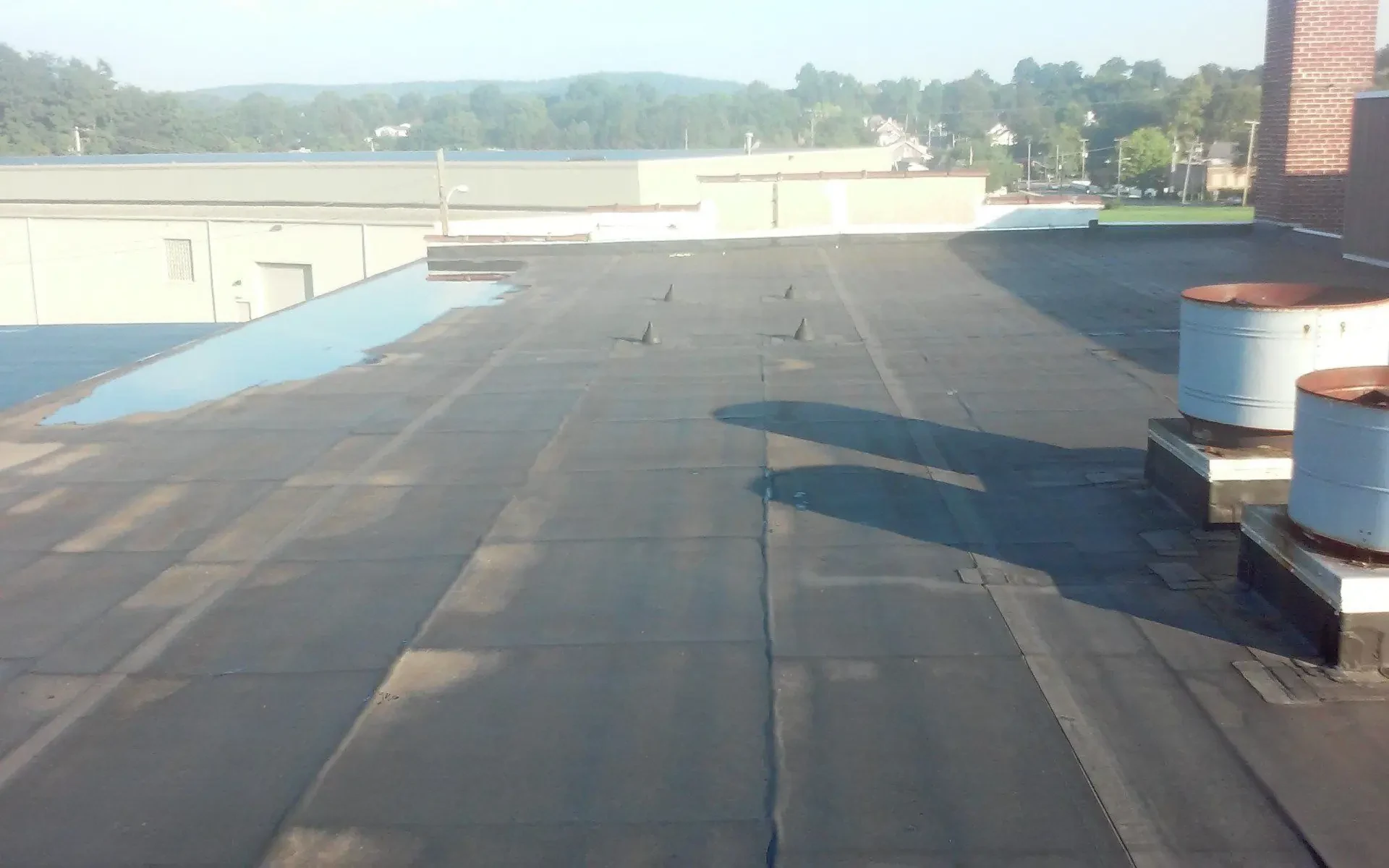
Roof Systems
60-mil TPO membrane specs, fastening patterns, and snow-load details for Ogden warehouses and manufacturing roofs. What the mil number actually protects.
Plan the Next Step