
The handoff should survive the service call
The practical handoff is a documented comparison of repair, restoration, recover, and replacement rather than a coating-first recommendation. The next person should receive the property address, roof-area identifiers, contacts, access notes, photographs, temporary measures, completed work, open recommendations, and timing. A persistent roof file connects dates, weather, symptoms, findings, repairs, costs, and follow-up. Trends become visible: recurring locations, growing wet areas, drainage issues, or a rising frequency of unrelated failures. Commercial Roofing of Ogden can keep inspection and maintenance active while repair, restoration, or replacement moves through a separate project opportunity. The path remains response, evidence, the right scope, closeout, and the next scheduled roof decision.
Collect the details that shape safe dispatch
Before dispatch, collect the address, responsible building contact, safe access route, occupied area below the problem, time and behavior of the leak, known roof type, and any temporary protection already attempted at the Ogden property. Interior photographs can preserve stain limits and active-drip locations before ceiling materials are moved. Roof photographs from facility staff may help with orientation, but they do not replace safe field verification or authorize untrained personnel to enter the roof. Clear intake notes reduce wasted roof time and prevent the handoff from losing urgent details. They also create the first event in the roof history that later inspections and repair records can reference.
Define scope and pricing boundaries
A proposal should distinguish verified quantities from allowances and investigation from construction. Roof area, repair limits, test cuts, wet-material removal, deck repair, drain work, equipment coordination, and interior protection can carry different pricing certainty. Alternates are useful when they compare real decisions, such as repair versus restoration preparation or recover versus tear-off. They are less useful when major necessary work is moved out of the base price simply to make one proposal appear lower. A reviewable proposal lets ownership compare boundaries, evidence, materials, quantities, disruption, and closeout-not just totals. The goal is a scope that remains understandable after the salesperson leaves the room.
Why local exposure changes the field plan
Ogden, UT roofs work through snow, intense ultraviolet exposure, wind, freeze-thaw cycling, and broad daily temperature changes. That exposure guides the field sequence, but it does not by itself explain an aging but potentially serviceable roof where owners need to know whether repairs and a coating or recover system can extend useful life without concealing wet or failed materials. Start with the room, ceiling grid, equipment, wall line, and time of entry, then carry those coordinates to the roof. Comparing high and low points, rooftop details, prior patches, and flow paths is more reliable than standing over the first wet-looking surface. This distinction protects the owner from treating a correlation as proof. It also lets the next technician revisit the precise unknown instead of repeating the entire investigation.
Document the condition before choosing the scope
The core deliverable is a record of roof type and age, core or moisture findings, repair boundaries, substrate condition, adhesion results, drainage, penetrations, edge details, preparation, thickness assumptions, and exclusions. Commercial Roofing of Ogden should be able to hand that record to ownership, a facility manager, or another contractor without a separate verbal explanation. The practical method is to confirm the existing assembly, investigate moisture, test adhesion where appropriate, define repairs and preparation, and verify that drainage and details can support the proposed system. Where destructive or electronic testing is proposed, the scope should identify its purpose, limitations, and restoration procedure before work begins. Temporary protection, permanent repair, routine maintenance, and capital recommendations belong in separate sections. This keeps a successful dry-in from being mistaken for the completed repair and lets competing proposals be compared on the same basis.
Treat each roof assembly on its own terms
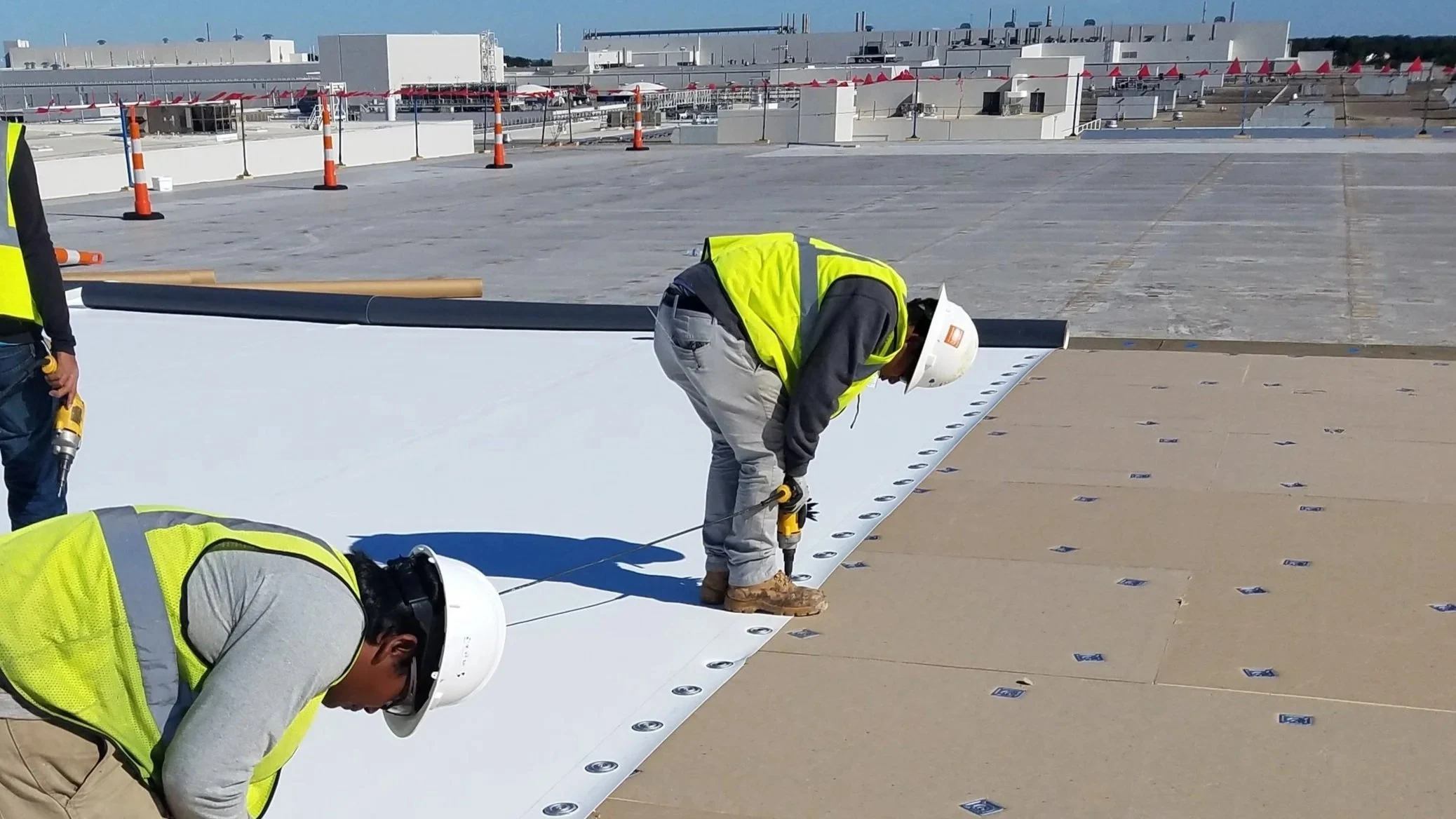
Roof-system identification changes the diagnosis. Around Ogden, the target page inventory includes PVC Roof Systems, TPO 60 Mil, and Modified Bitumen Sbs, each with its own seam, flashing, fastener, and compatibility questions. Record membrane type, surfacing, insulation and cover-board clues, attachment, flashings, penetrations, edges, and earlier repairs. If the assembly cannot be confirmed visually, say so and define the core or document review needed to confirm it. The final comparison should show which materials can accept repair or restoration, which areas need removal, and which unknowns could change the scope. Product preference comes after those conditions are established.
Roof work has to fit real operations
Building operations change how the same roof work is performed. On Aerospace Defense Roofing, Logistics 3Pl, or Insurance Restoration, access, interior sensitivity, security, and working hours can define the safe sequence. The pre-work review should locate safe access, occupied areas, shutdown constraints, fire or security procedures, rooftop equipment, pedestrian controls, and interior protection. The building contact should know which decisions are needed before mobilization. Wet-weather work may stop at stabilization because permanent materials need a clean, dry substrate and a workable forecast. Daily closeout should state what was opened, completed, and left under temporary protection.
Make repair, restoration, and replacement distinct decisions
The decision point is whether the roof is a viable restoration candidate, whether only selected areas qualify, or whether recover or replacement is the more responsible path. The evidence may support a small permanent repair, a broader corrective scope, a restoration evaluation, recover design, or tear-off, but the report needs to show why. The option matrix should address present failure, remaining risk, investigation still required, installation disruption, anticipated service interval, and future maintenance. Unknown inputs should be visible rather than buried in an allowance. A smaller scope is not automatically prudent, and a larger scope is not automatically safer. The defensible option is the one whose boundaries match the documented condition and the owner's operating requirements.
Ogden decision checklist
- Map the interior symptom to a named roof area before selecting a repair detail.
- Record temporary measures separately from permanent work and list every open item.
- Verify drainage, penetrations, walls, edges, earlier repairs, and transitions around the affected area.
- State the observed roof assembly, unknown construction, access limits, and testing assumptions.
- Connect the recommendation to repair, restoration, replacement, maintenance, or capital-planning thresholds.
- Set the next inspection or follow-up date so the roof history continues after this visit.
Commercial roof decision questions
Does this condition automatically mean the roof must be replaced?
No. The review should establish whether the roof is a viable restoration candidate, whether only selected areas qualify, or whether recover or replacement is the more responsible path. Replacement becomes a defensible recommendation only when the field evidence, moisture, assembly condition, repair history, deck or attachment concerns, and lifecycle comparison support it.
What should the Ogden roof scope document?
It should document roof type and age, core or moisture findings, repair boundaries, substrate condition, adhesion results, drainage, penetrations, edge details, preparation, thickness assumptions, and exclusions. It should also label temporary and permanent work separately, state assumptions and exclusions, and identify the inspection or service step that follows the current scope.
How does an urgent call become a maintenance or capital plan?
The immediate visit creates the first roof-area record. A follow-up inspection establishes condition and priorities. Completed repairs, recurring observations, drain service, warranties, and future recommendations are then retained so maintenance stays scheduled and larger work can be placed into the appropriate capital year.