- Roofing Guidance
- Commercial Roofing Services
Repairing What the Canyon Winds and Snow Actually Do to a Roof
Storm damage in Weber and Davis County doesn't usually look like hail damage from the Front Range or hurricane damage from the Gulf Coast. It looks like edge metal peeled back where a canyon wind event got underneath it, membrane torn at a fastener line, or a section of roof deflected under a load of heavy wet snow that sat there for weeks. We repair to the actual failure mode we find, not a generic storm-damage template.
The Storm Patterns That Hit This Roof Stock
Four patterns account for most of the storm calls we take. Canyon east-wind events funnel down through Ogden Canyon and Weber Canyon and hit roofs with sustained gusts that find any loose edge metal or under-fastened membrane and peel it back, sometimes stripping a long run of coping in one event. Heavy wet snow, common with lake-effect bands off the Great Salt Lake, loads a low-slope roof well beyond what a light dry-snow climate would ever see, and older roofs with marginal structural capacity can show real deflection or membrane stress under that weight. Spring melt creates ice damming at drains, scuppers, and parapets where meltwater refreezes overnight, backing water up under the membrane at exactly the point it's supposed to be draining away. And summer brings occasional microburst wind events, short and violent, that can do damage in a matter of minutes to rooftop equipment curbs and loosely secured mechanical units as much as to the membrane itself.
We also see combination events, where a canyon wind that peeled a section of edge metal in the fall goes unnoticed until a following winter's snow load finds that weak point and pushes water through it during the next melt. Tracing storm damage back to its originating event matters for the claim, and it also tells us whether we're repairing an isolated failure or a chain of related problems that started months earlier.
Why Storm Repairs Need Documentation Before They Start
We photograph and document damage before touching anything, because that record is what your insurance documentation process runs on. A contractor who repairs first and photographs after, if at all, leaves you with a weaker claim and no proof the damage matches what's described. We treat the documentation step as part of the repair, not a courtesy add-on.
- Full photo documentation of storm damage before any repair work begins
- Failure-mode assessment: wind uplift, snow load, ice dam, or impact, each repaired differently
- Edge metal and coping reset with upgraded fastening where the original was clearly inadequate
- Structural deck check where snow load damage is suspected, not only membrane patching
- Drain and scupper clearing where ice damming caused the backup
- Written repair scope tied directly to the documented damage, for your records and your insurer's
Edge Metal: The Single Most Common Failure Point
If we had to name the one detail that fails most often in a canyon wind event, it's edge metal and coping that wasn't fastened to withstand the actual wind exposure of the site. Once wind gets under a lifted edge, it can peel back a long section fast, and that peeled edge often leads directly to membrane tearing further into the field of the roof. Storm repair here almost always includes a hard look at edge metal fastening, not only replacing the visibly damaged section.
When we repair storm-damaged edge metal, we upgrade the fastening pattern at that section rather than reinstalling to the same spacing that just failed. Putting the same detail back exactly as it was is asking for a repeat call during the next comparable wind event, and we won't quote a repair that way even if it's the cheaper number on paper.
Repair Versus Reroof After a Major Storm
Sometimes storm damage exposes a roof that was already near the end of its service life. We'll tell you honestly if a repair is a real fix or a stopgap on a roof that's going to need a full reroof within a year or two regardless. That distinction matters for how you use insurance proceeds and plan capital spending, and we'd rather give you that assessment upfront than let you spend repair money that should have gone toward replacement.
Storm Damage Questions
How do I know if roof damage is from a specific storm or gradual wear?
We look for damage patterns consistent with a specific event, like a directional tear pattern from wind or a load-related deflection tied to a known heavy snow period, versus gradual wear like UV-degraded membrane that fails independent of any single storm. That distinction matters for insurance claims.
Do you document damage for insurance before repairing?
Always. Photo documentation before repair work starts is standard on every storm call, not an extra step you have to request.
Can wind damage be present without an obvious hole in the roof?
Yes, and this is one of the most missed issues. Lifted edge metal or loosened fasteners without a visible tear can still be storm damage that needs repair before the next wind event finishes the job.
What should I do immediately after noticing storm damage?
If water is actively entering the building, that's an emergency tarp and dry-in situation first. If damage is visible but not actively leaking, get it documented and assessed before the next storm event makes it worse.
Does snow load damage show up right away?
Not always. Structural stress from a heavy snow season can show up as gradual deflection or membrane stress that becomes visible weeks or months after the snow has melted, which is part of why a post-winter inspection matters.
Questions About Storm Damage Roof Repair in Ogden, UT
Ready to Review the Roof?
Commercial Roofing Services
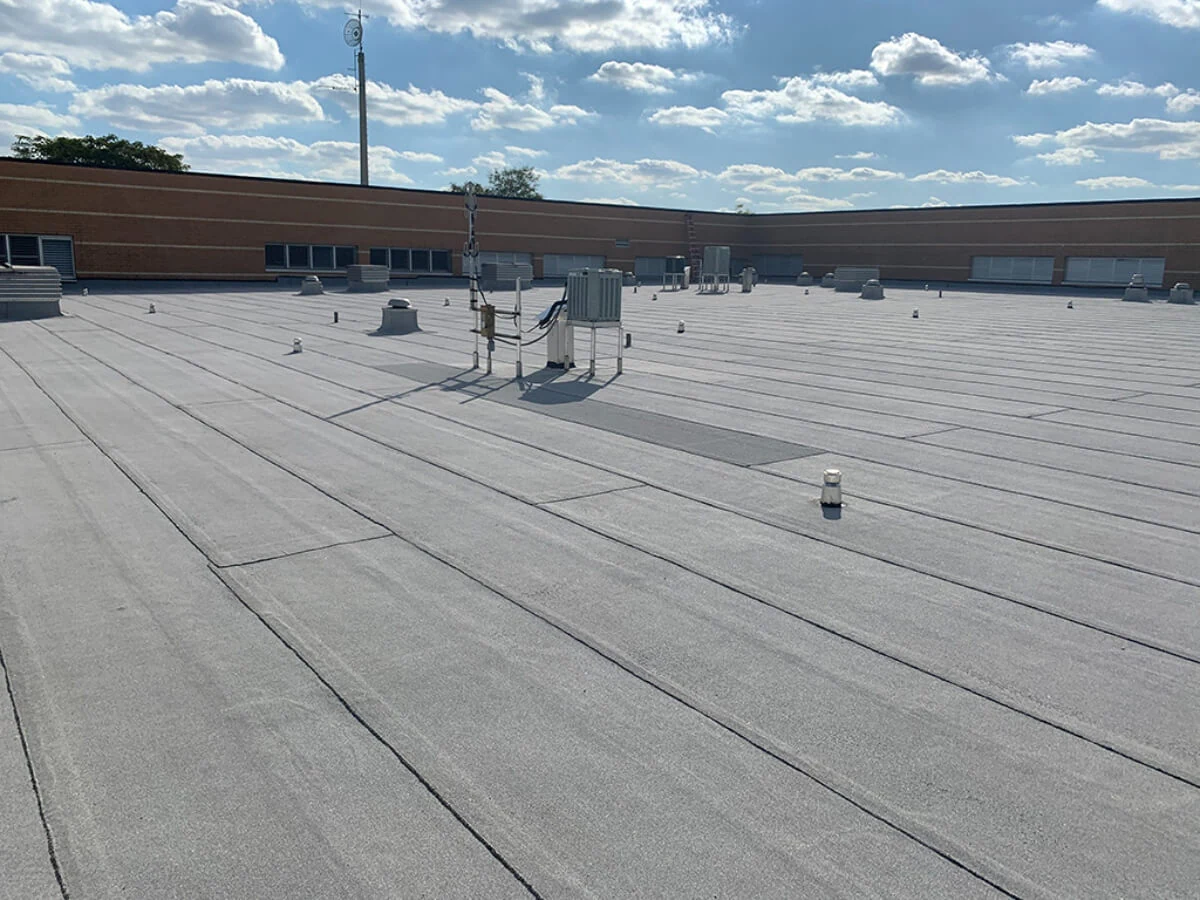
Storm damage repair for Ogden commercial roofs hit by canyon winds, heavy snow, or microburst events, with damage documented before repairs begin.
Plan the Next Step